
No products in the cart.: $0.00

Germall Plus
ORY® product lines:
☑ Skincare (with restrictions)
☑ Haircare
◐ Handmade Soap (liquid soap — alkaline-tolerant; not needed in bars)
◐ Cosmetics (not lip products; not aerosols) — three-line functional ingredient with formaldehyde-releaser disclosure
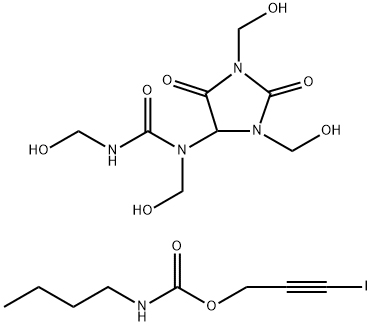
Germall Plus is a broad-spectrum, water-soluble preservative blend that pairs diazolidinyl urea (antibacterial) with iodopropynyl butylcarbamate, IPBC (antifungal), at very low use levels (0.1–0.5%). It is prized by formulators because it works across pH 3–8, tolerates heat, is unaffected by surfactants or cationics, and is one of the few systems reliable in alkaline liquid soap. Both components are reviewed as safe as used by the Cosmetic Ingredient Review Panel within specified limits [1, 2]. Two facts define its responsible use. First, diazolidinyl urea is a formaldehyde-releaser: it works partly by slowly liberating trace formaldehyde, and formaldehyde-releasers are a recognized cause of contact allergy in formaldehyde-sensitive individuals [3, 4]. Second, IPBC is restricted — not permitted in lip products, oral products, or body lotions for children under three, and limited in deodorants and aerosols [2]. ORY® therefore discloses Germall Plus clearly, reserves it for products where its alkaline tolerance is needed (liquid soap, some surfactant systems), and offers phenoxyethanol-based alternatives for sensitive customers.
What is Germall Plus made of?
Liquid Germall Plus is a solution of two actives in propylene glycol. Components [1, 2]:
- Diazolidinyl urea (~39%): Formaldehyde-releasing antibacterial; broad Gram-positive/negative coverage; pH 3–8; heat-stable.
- Iodopropynyl butylcarbamate, IPBC (~1%): Potent antifungal (yeast, mold) at ppm levels; iodine-containing; EU maximum 0.02% leave-on/rinse-off, 0.0075% deodorant; not for lips, oral, or children under 3 (body lotions).
- Propylene glycol (~60%): Solvent carrier.
- Typical use 0.1–0.5% (0.5% delivers ~0.005% IPBC — well within limits).
- Free formaldehyde: Trace, from diazolidinyl urea release; relevant to formaldehyde-allergic users [3].
What skin type is best suited for Germall Plus?
Germall Plus is a formulation-level ingredient suited to most ORY® skin types, with exceptions:
- All skin types: Germall Plus is a formulation-level ingredient rather than a skin-type active; at its use level it is suitable for every ORY® skin type.
- Sensitive: Not recommended for formaldehyde-allergic or highly reactive customers [3, 4]; ORY® offers phenoxyethanol-based alternatives.
- Acne-prone: Prevents microbial growth that can worsen breakouts; non-comedogenic.
- Dry: Protects water-rich hydrating products.
- Oily and Combination: Protects gels, toners, and light lotions.
- Mature: Protects active-rich serums and creams over their shelf life.
- Normal: Everyday product protection.
What hair type is best suited for Germall Plus?
Germall Plus is robust in surfactant- and cationic-based haircare:
- All hair and scalp types: Germall Plus protects water-based shampoos, conditioners, leave-ins, and scalp serums; no direct effect on hair.
- Sensitive scalp: Low-irritation preservation at use levels; patch test if preservative-sensitive.
- Curly and coily: Essential in water-rich curl creams and leave-ins that stay on the hair.
- Dandruff-prone scalp: Prevents contamination of scalp treatments applied to compromised skin.
- Oily scalp, dry or damaged, color-treated, mature or thinning, straight, wavy: Neutral; formulation-level protection for all.
What are the benefits of Germall Plus?
Germall Plus’s benefits are functional and its limits well defined [1–4]:
- Broad-spectrum at low levels: Bacteria, yeast, and mold at 0.1–0.5%.
- Wide pH (3–8) and heat tolerance: Including alkaline liquid soap and hot-process products.
- Surfactant- and cationic-compatible: Reliable in shampoos, conditioners, cleansers.
- Water-soluble, easy to dose: Liquid; no solubility issues.
- Long track record: Decades of use; CIR-reviewed [1, 2].
- Cost-effective: Very low use rate.
Dual use across ORY® product lines
Germall Plus serves water-containing products in three ORY® lines with restrictions; it is the preferred system for alkaline liquid soap.
| ORY® line | Dual use? | How it is used | Typical level |
|---|---|---|---|
|
ORY® Skincare |
Yes |
Lotions, creams, gels, toners, cleansers (not lip products; not baby body lotions). |
0.1–0.5% |
|
ORY® Haircare |
Yes |
Shampoos, conditioners, leave-ins, scalp products. |
0.1–0.5% |
|
ORY® Handmade Soap |
Limited |
Liquid and cream soaps (alkaline-tolerant); not needed in cold-process bars. |
0.1–0.5% |
|
ORY® Cosmetics |
Limited |
Foundations, mascaras, cream products; NOT lip products; NOT aerosols. |
0.1–0.5% |
Pros and cons of Germall Plus
Pros
Cons
- Works where others fail: Alkaline liquid soap; surfactant systems.
- Very low use rate: 0.1–0.5%.
- Broad-spectrum: Bacteria plus fungi.
- Heat- and pH-tolerant: Robust.
- CIR-reviewed: [1, 2].
- Formaldehyde-releaser: Contact allergy in formaldehyde-sensitive users [3, 4]; disclosure and alternatives needed.
- IPBC restrictions: No lip, oral, aerosol, or under-3 body-lotion use [2].
- Clean-beauty exclusion: Excluded from most natural standards.
- Propylene glycol carrier: Rare sensitivity.
- Not for oil-based products: Water-soluble only (irrelevant in anhydrous products, which need no preservative).
What is the best application of Germall Plus?
Germall Plus is added at cool-down to water-containing products:
- Liquid or cream soap: 0.3–0.5% (alkaline-tolerant).
- Shampoo/conditioner: 0.3–0.5%.
- Lotion or cream: 0.3–0.5% at cool-down (<50 °C).
- Gel or toner: 0.2–0.5%.
- Cosmetics (non-lip): 0.3–0.5%.
- Challenge testing: Confirm efficacy per formula.
Peer-reviewed references
- Elder RL (ed). Final report on the safety assessment of diazolidinyl urea. Journal of the American College of Toxicology. 1990;9(2):229–245.
- Andersen FA (Cosmetic Ingredient Review Expert Panel). Final report on the safety assessment of iodopropynyl butylcarbamate (IPBC). International Journal of Toxicology. 1998;17(Suppl 5):1–37.
- de Groot AC, Flyvholm MA, Lensen G, Menné T, Coenraads PJ. Formaldehyde-releasers: relationship to formaldehyde contact allergy. Contact allergy to formaldehyde and inventory of formaldehyde-releasers. Contact Dermatitis. 2009;61(2):63–85.
- de Groot A, White IR, Flyvholm MA, Lensen G, Coenraads PJ. Formaldehyde-releasers in cosmetics: relationship to formaldehyde contact allergy. Part 2. Patch test relationship to formaldehyde contact allergy, experimental provocation tests, amount of formaldehyde released, and assessment of risk to consumers allergic to formaldehyde. Contact Dermatitis. 2010;62(1):18–31.
- Lundov MD, Moesby L, Zachariae C, Johansen JD. Contamination versus preservation of cosmetics: a review on legislation, usage, infections, and contact allergy. Contact Dermatitis. 2009;60(2):70–78.
Disclaimer:
The information on this page is provided by ORY International, LC for educational purposes only. It summarizes published research about Germall Plus (diazolidinyl urea, iodopropynyl butylcarbamate, and propylene glycol) as an ingredient, including laboratory and animal studies and clinical studies of formulas that may differ from ORY® products. Results from these studies may not apply to every person or to ORY® products. This page is not medical advice and does not replace advice from a dermatologist, physician, or other qualified healthcare provider.
ORY® Skincare, Haircare, Handmade Soap, and Cosmetics products are cosmetics. They are not intended to diagnose, treat, cure, mitigate, or prevent any disease or condition, including eczema, dermatitis, acne, dandruff, or any other condition. References to FDA or Cosmetic Ingredient Review (CIR) findings describe the ingredient, not ORY® products, and do not mean FDA has reviewed or approved any ORY® product.
Not for use in lip products, products for use in the mouth, or sprays and aerosols. Not for body lotions intended for children under 3.
Results vary by skin and scalp type, formulation, and use. Diazolidinyl urea is a formaldehyde-releaser and a recognized cause of contact allergy in people allergic to formaldehyde. Propylene glycol can occasionally cause allergy. Any cosmetic can cause irritation, sometimes from other ingredients. Always patch test, follow label directions, and stop use if irritation occurs. If you are pregnant, nursing, have a medical condition, or are buying for a child, consult a healthcare provider before use.
ORY International, LC works to keep this page accurate and current but makes no warranty as to its completeness. To the fullest extent permitted by law, ORY International, LC is not liable for any loss or injury arising from reliance on this information or from use of any product contrary to its label directions. To report a reaction, contact us at [insert contact email / phone].