
No products in the cart.: $0.00

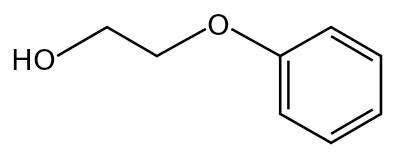
Phenoxyethanol

ORY® product lines:
☑ Skincare
☑ Haircare
◐ Handmade Soap (liquid soap and water-containing bars only; not needed in cold-process bars)
☑ Cosmetics — three-line functional ingredient
Phenoxyethanol is the world’s most widely used cosmetic preservative — a glycol ether with broad activity against bacteria (including Pseudomonas), yeast, and mold, effective across pH 3–10, stable to heat, and compatible with almost every formulation type. It rose to prominence as the leading paraben alternative, and its safety record is unusually deep: the Cosmetic Ingredient Review Panel concluded it is safe as used [1], the EU Scientific Committee on Consumer Safety confirmed it is safe for all consumers, including children, at up to 1% [2], and a 2019 dermatological safety review found contact allergy to be rare [3]. Phenoxyethanol is usually paired with a booster (ethylhexylglycerin, caprylyl glycol, or sorbic acid — see Optiphen Plus) for full-spectrum coverage at lower levels. Every water-containing product needs a preservative: unpreserved creams, gels, and shampoos grow bacteria, yeast, and mold within days, and contaminated cosmetics have caused documented skin and eye infections [reviewed in the reference list]. Anhydrous products (oils, balms, butters, cold-process soap) do not need one.
What is Phenoxyethanol made of?
Phenoxyethanol is synthesized by reacting phenol with ethylene oxide, then purified; it also occurs naturally in trace amounts in green tea and chicory. Points to know [1–3]:
- Aromatic glycol ether (C₈H₁₀O₂): Clear, slightly viscous liquid with a faint rose scent; water solubility ~2.5%.
- Broad-spectrum: Strongest against Gram-negative bacteria (Pseudomonas aeruginosa); good against Gram-positives; moderate against yeast and mold (hence boosters).
- pH 3–10, heat-stable, non-ionic: Works in acids, cationic conditioners, and emulsions alike.
- Regulatory: EU maximum 1%; SCCS-confirmed safe at 1% for all ages [2].
- Typical use: 0.5–1.0% alone; 0.4–0.8% with a booster.
What skin type is best suited for Phenoxyethanol?
Phenoxyethanol is a formulation-level ingredient suitable for all seven ORY® skin types:
- All skin types: Phenoxyethanol is a formulation-level ingredient rather than a skin-type active; at its use level it is suitable for every ORY® skin type.
- Sensitive: Contact allergy is rare [3]; patch test if preservative-sensitive.
- Acne-prone: Prevents microbial growth that can worsen breakouts; non-comedogenic.
- Dry: Protects water-rich hydrating products.
- Oily and Combination: Protects gels, toners, and light lotions.
- Mature: Protects active-rich serums and creams over their shelf life.
- Normal: Everyday product protection.
What hair type is best suited for Phenoxyethanol?
Phenoxyethanol protects every water-based ORY® haircare product:
- All hair and scalp types: Phenoxyethanol protects water-based shampoos, conditioners, leave-ins, and scalp serums; no direct effect on hair.
- Sensitive scalp: Low-irritation preservation at use levels; patch test if preservative-sensitive.
- Curly and coily: Essential in water-rich curl creams and leave-ins that stay on the hair.
- Dandruff-prone scalp: Prevents contamination of scalp treatments applied to compromised skin.
- Oily scalp, dry or damaged, color-treated, mature or thinning, straight, wavy: Neutral; formulation-level protection for all.
What are the benefits of Phenoxyethanol?
Phenoxyethanol’s benefits are functional and thoroughly reviewed [1–4]:
- Broad-spectrum preservation: Bacteria, yeast, and mold; strongest against Pseudomonas [3].
- Wide pH and heat tolerance: Works in nearly every formula type.
- Low sensitization: Rare contact allergy compared with formaldehyde-releasers and MI/MCI [3, 4].
- Paraben-free option: Consumer-accepted alternative.
- Compatibility: Non-ionic; works with cationics, anionics, and actives.
- Regulatory clarity: Global acceptance; EU 1% limit [2].
- Booster-friendly: Pairs with ethylhexylglycerin, caprylyl glycol, sorbic acid for full spectrum.
- Stability: Does not degrade in light or air.
Dual use across ORY® product lines
Phenoxyethanol protects water-containing products in three ORY® lines; cold-process bar soap needs no preservative, but liquid and water-containing bar products do.
| ORY® line | Dual use? | How it is used | Typical level |
|---|---|---|---|
|
ORY® Skincare |
Yes |
Serums, toners, creams, lotions, gels, masks, cleansers, mists. |
0.5–1.0% |
|
ORY® Haircare |
Yes |
Shampoos, conditioners, leave-ins, scalp serums, curl creams. |
0.5–1.0% |
|
ORY® Handmade Soap |
Limited |
Not needed in cold-process bars (pH ~10, low water); required in liquid soaps, whipped/cream soaps, and syndet bars containing water. |
0.5–1.0% in liquid/cream products |
|
ORY® Cosmetics |
Yes |
Foundations, BB creams, setting sprays, mascaras, cream products. |
0.5–1.0% |
Pros and cons of Phenoxyethanol
Pros
Cons
- Most-studied paraben alternative: [1–3].
- Broad-spectrum, wide pH: Versatile.
- Low allergy rate: [3, 4].
- Affordable, stable: Reliable.
- Booster combinations: Lower total load.
- Weaker on mold/yeast alone: Use a booster.
- Faint rose odor: Usually masked.
- “Clean beauty” perception: Some lists exclude it despite strong safety data; ORY® should explain.
- Limited water solubility (~2.5%): Add to the water phase warm or via glycol.
- Rare allergy: Patch test.
What is the best application of Phenoxyethanol?
Phenoxyethanol is built into water-containing formulas:
- Serum or toner: 0.8–1.0% alone, or 0.5% with 0.5% ethylhexylglycerin.
- Cream or lotion: 0.8% with caprylyl glycol.
- Shampoo/conditioner: 0.8–1.0%.
- Liquid soap: 0.8–1.0%.
- Cosmetics: 0.8–1.0%.
- Challenge testing: Confirm efficacy in each new formula (USP 51 / ISO 11930).
Peer-reviewed references
- Elder RL (ed). Final report on the safety assessment of phenoxyethanol. Journal of the American College of Toxicology. 1990;9(2):259–277.
- Scientific Committee on Consumer Safety (SCCS). Opinion on phenoxyethanol, SCCS/1575/16. European Commission; 2016. (Regulatory source: safe at up to 1% in cosmetics for all consumers.)
- Dréno B, Zuberbier T, Gelmetti C, Gontijo G, Marinovich M. Safety review of phenoxyethanol when used as a preservative in cosmetics. Journal of the European Academy of Dermatology and Venereology. 2019;33(Suppl 7):15–24.
- Lundov MD, Moesby L, Zachariae C, Johansen JD. Contamination versus preservation of cosmetics: a review on legislation, usage, infections, and contact allergy. Contact Dermatitis. 2009;60(2):70–78.
Disclaimer:
The information on this page is provided by ORY International, LC for educational purposes only. It summarizes published research about phenoxyethanol as an ingredient, including laboratory and animal studies and clinical studies of formulas that may differ from ORY® products. Results from these studies may not apply to every person or to ORY® products. This page is not medical advice and does not replace advice from a dermatologist, physician, or other qualified healthcare provider.
ORY® Skincare, Haircare, Handmade Soap, and Cosmetics products are cosmetics. They are not intended to diagnose, treat, cure, mitigate, or prevent any disease or condition, including eczema, dermatitis, acne, dandruff, or any other condition. References to FDA or Cosmetic Ingredient Review (CIR) findings describe the ingredient, not ORY® products, and do not mean FDA has reviewed or approved any ORY® product.
Results vary by skin and scalp type, formulation, and use. Allergy to phenoxyethanol is rare. Any cosmetic can cause irritation, sometimes from other ingredients. Always patch test, follow label directions, and stop use if irritation occurs. If you are pregnant, nursing, have a medical condition, or are buying for a child, consult a healthcare provider before use.
ORY International, LC works to keep this page accurate and current but makes no warranty as to its completeness. To the fullest extent permitted by law, ORY International, LC is not liable for any loss or injury arising from reliance on this information or from use of any product contrary to its label directions. To report a reaction, contact us at [insert contact email / phone].